INSECTS & WILDLIFE HABITAT Butterflies, moths, bees, and other pollinators use leaf litter for shelter and protection during the cold months.
Leaves give Eastern Red Bats (a species native to our area) a comfy place to stay hidden while they hibernate. We mostly know of Eastern Red Bats using leaf piles to hibernate for short periods as they migrate south to avoid intense cold during the winter. Leaves provide a safe place for these bats to become torpid, during which they allow their body temperatures to drop to just above local air temperature.
Insects that use leaf litter to overwinter their larvae or pupae include fireflies, luna moths, woolly bears, lacewings, swallowtail butterflies, bumble bees, lady bugs. These insects rely on leaves to help complete their lifecycle in the spring.
Some insects use the leaf litter as a food source, such as millipedes and pill bugs.
Insects like stick bugs lay their eggs directly onto leaves.
SOIL HEALTH & NUTRITION
Natural fertilizer: Decaying leaves release valuable nutrients and organic matter back into the soil, reducing your need for synthetic fertilizers.
Moisture retention: A layer of leaves acts as a natural mulch that keeps the soil moist and suppresses weeds.
Not everyone is able to leave ALL their leaves, for various reasons. But there are still ways your can make an impact in your yard!
Only remove leaves that are on walkways, curbside, and covering storm drains
Rake leaves from the lawn into garden beds – they can be left in big piles!
Rake leaves into a scrub patch or tree line
Leave some leaves in the lawn – rake what is needed to avoid heavy leaf litter killing your lawn, but leave some behind. A few scattered leaves on your lawn will not hurt it!
Learn more about how to create an overwinter habitat for insects here.
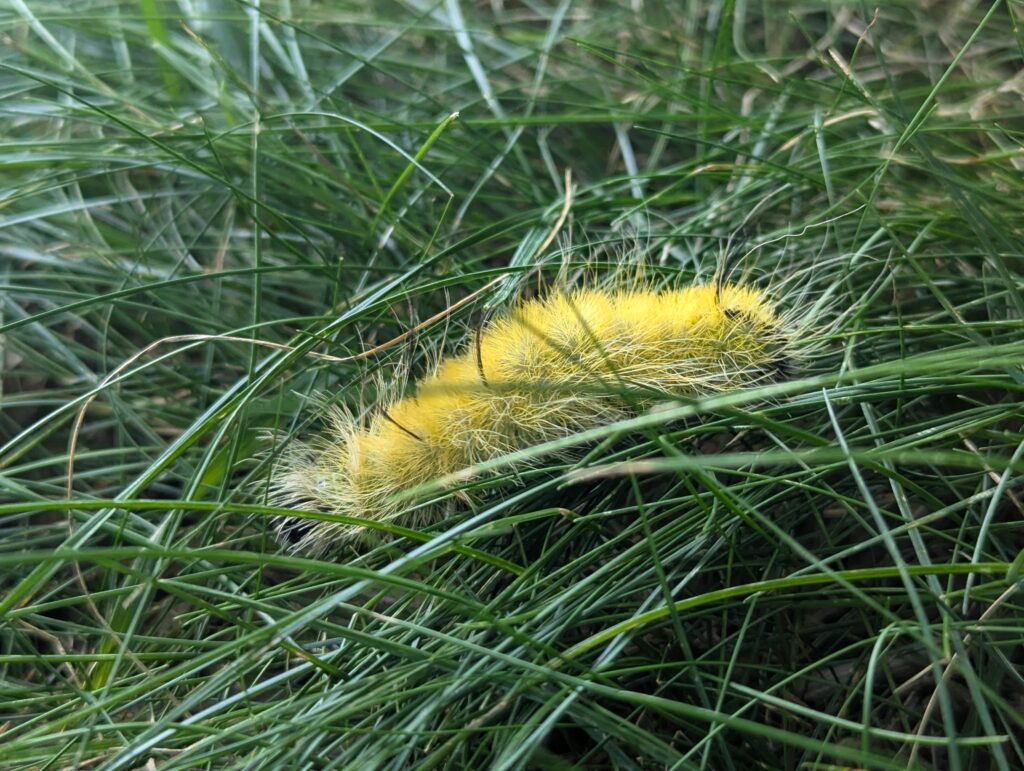
American Dagger Moth Caterpillar | photo courtesy Jessi Spencer
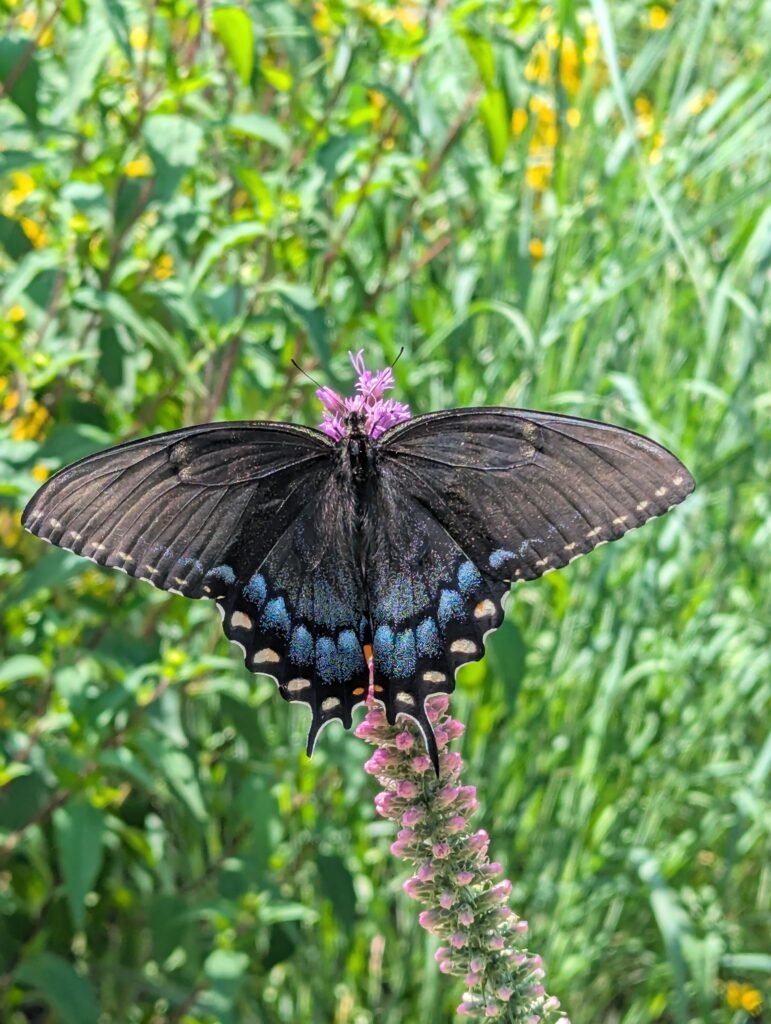
Black Swallowtail | photo courtesy Jessi Spencer
OTHER NEGATIVE EFFECTS OF LEAF REMOVAL
There are other environmental impacts to leaf removal.
Gas powered leaf blowers emit high levels of pollutants like benzene, nitrogen oxides, and volatile organic compounds, contributing significantly to air pollution.
Leaf blowers damage our hearing, stir up dust, create fumes, and sandblast wildlife
Cities spend thousands of dollars annually to remove leaves. If leaf removal was drastically reduced, how much could cities save in labor, gas, and wear and tear on trucks?
FAQ
Is it okay to mulch my leaves? Mulching your leaves has nutrient benefits for your soil, but unfortunately does not provide much benefit for wildlife or insects.
My HOA makes me rake my leaves!What can I do? Try moving all the leaves from the lawn to your garden beds, or move them to a fenced in backyard. Also, you can test the waters on how much leave litter you can leave behind before someone says anything.
How are insects using the leaves that fall? Not only do many insects and wildlife use leaf litter to create a cozy habitat to overwinter in, but insects also lay eggs on leaves, which will not hatch until spring. Removing the leaves or mulching them can destroy these eggs. Other insects use the leaves as a food source.
Okay, so we’ve kept the bugs around by keeping the leaves. What benefits do all these bugs have for our world? Pollinators famously help us grow food! They spread pollen to help plants grow. Other bugs aid in decomposition, while others are predator insects – they eat other insects to keep things balanced. Bats, who benefit from leaf litter, consume pesky mosquitos as well as beetles and cicadas. Beetles, ants, spiders, are all predators for ticks. Keeping the leaves around can help keep our local eco-system balanced!